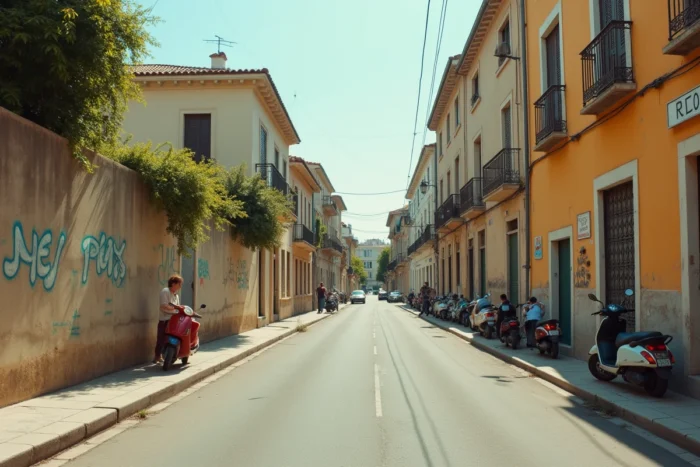
The Mosson shows between 75 and 90 offenses per 1,000 inhabitants per year, a ratio higher than that of many other priority neighborhoods in France. This level of reported delinquency, rarely put into perspective in traditional guides, nonetheless conditions any serious reading of the residential market in Montpellier. Identifying neighborhoods to avoid in Montpellier requires cross-referencing security data, socio-economic indicators, and actual urban dynamics.
Crime rates by sector: what public statistics reveal in Montpellier
We observe that most articles on the subject limit themselves to labeling a neighborhood as “sensitive” without providing a scale of magnitude. Public data, however, allows for the ranking of sectors.
The Mosson and La Paillade concentrate the highest crime rates in the metropolitan area. These levels remain consistent despite successive urban policy measures, indicating a structural entrenchment of security issues.
Petit-Bard – Pergola presents a different but equally problematic profile. Classified as a QPV (Priority Neighborhood of Urban Policy), this sector combines socio-economic precariousness and some of the highest poverty rates in the metropolitan area. The median income is significantly lower than the Montpellier average, which weighs on the local commercial fabric and perceived quality of life.
We have compiled relevant criteria for evaluating a neighborhood, particularly by analyzing the neighborhoods to avoid in Montpellier according to Belle Déco, which largely overlap with this analytical framework.

The Mosson and La Paillade: anatomy of a neighborhood classified as a priority security zone
The Mosson is not a homogeneous block. The sector encompasses several sub-neighborhoods with distinct realities: the degraded condominiums in the northern part of the area concentrate most of the delinquency incidents, while the outskirts of the La Paillade estate, which are more suburban, remain relatively spared.
The drug trade structures the underground economy of the neighborhood and generates cascading nuisances: urban rodeos, damage to building lobbies, tensions between groups. These elements directly impact rental vacancy rates, which remain high in the most exposed condominiums.
For an investor, the attractive price per square meter in La Mosson constitutes a classic trap. The displayed gross yield does not take into account tenant turnover, more frequent unpaid rents, and condominium fees often burdened by vandalism. We recommend excluding this sector from any asset strategy, except for very targeted operations with a fine knowledge of the area.
Petit-Bard – Pergola and Les Cévennes: two QPV with divergent trajectories
Petit-Bard – Pergola is the most precarious neighborhood in the Montpellier metropolitan area. Geographic isolation, the absence of diversified local shops, and the dilapidation of buildings create a vicious circle that urban renewal programs struggle to break.
Les Cévennes, another sector classified as a QPV, share some characteristics with Petit-Bard but benefit from a tramway service that changes the game in the medium term. The proximity to Avenue de Toulouse and the shopping center offers a network of services that Petit-Bard lacks.
- In Petit-Bard, most buildings date from the 1960s-1970s, with condominiums in chronic financial difficulty and rehabilitation work progressing slowly
- Les Cévennes have a slightly newer housing stock and some renovated residences that drive prices up in certain pockets
- Both neighborhoods suffer from a degraded image that dampens student rental demand, which is strong elsewhere in Montpellier
The distinction between these two QPV is rarely made in mainstream guides, which lump them together under the label “northern neighborhoods.” This is an analytical error: Les Cévennes present a potential for revaluation that Petit-Bard does not offer in the visible horizon.
Figuerolles: a neighborhood in transition that reputation has not yet caught up with
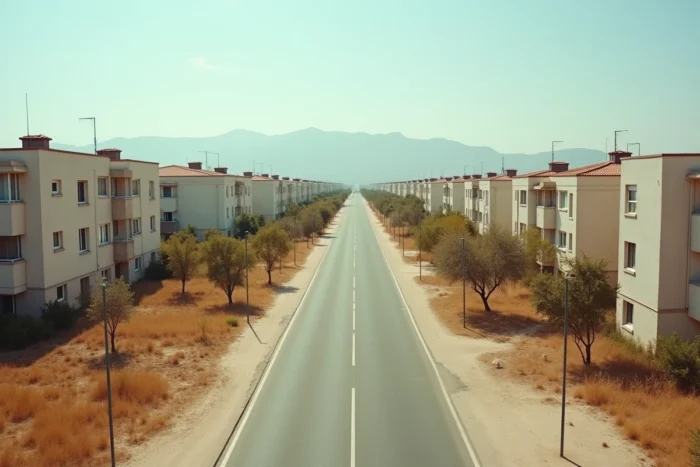
Figuerolles is divisive. The sector carries a reputation as a neighborhood to avoid inherited from the 2000s, when nighttime nuisances and cleanliness issues made it off-putting for families. The reality in 2024 is more nuanced.
The upper part of Figuerolles, towards Plan Cabanes, has experienced gradual gentrification driven by the arrival of independent shops, restaurants, and a young active population. The lower part, near Boulevard Renouvier, remains significantly less stabilized with persistent issues of street dealing and damage.
For a resident, the question arises in terms of micro-location: two streets apart can radically change the living environment. We observe that local real estate agencies play on this ambiguity by selling “Figuerolles” without specifying the sub-sector, which exposes uninformed buyers.
Framework for assessing the safety of a Montpellier neighborhood
Rather than relying on reputations, we recommend cross-referencing several concrete indicators before committing to a sector:
- The QPV classification or not of the neighborhood, available on the Ministry of Territorial Cohesion’s website, provides a first objective filter on socio-economic precariousness
- The rental vacancy rate in the sector, available from local housing observatories, signals areas where demand does not meet supply
- The presence or absence of ongoing urban renewal projects (ANRU, NPNRU) indicates whether the neighborhood is on an upward trajectory or stagnating
- Noise nuisances related to road traffic or nightlife areas, often underestimated, can be verified by visits at different times
A QPV classified neighborhood with an active ANRU program does not have the same risk profile as a QPV without a rehabilitation project. This distinction is fundamental for arbitrating between sectors.
Montpellier remains a metropolis with sustained demographic growth, which generally drives rental demand upward. Neighborhoods to avoid are not definitively so, but their revaluation timeline varies from a few years to over a decade. Taking a position in a degraded sector without mastering this timeline amounts to speculation, not investment.