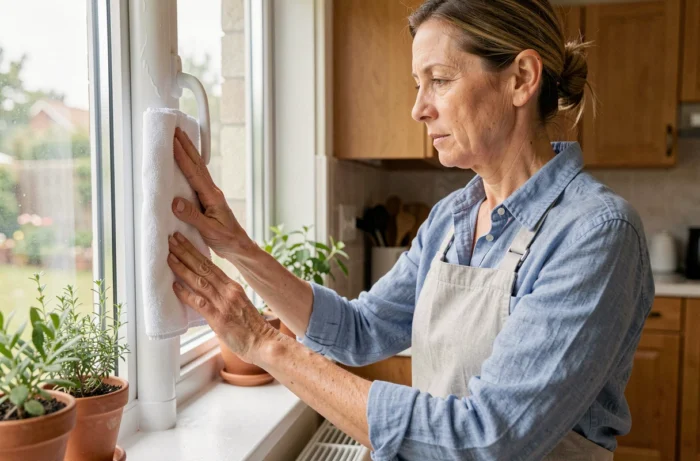
We use construction tape on PVC window frames to protect the woodwork during renovations, to fix insulating film in winter, or to hold a temporary blind. A few weeks later, the tape comes off, but the adhesive remains. The tape marks on PVC windows embed themselves more quickly if the frame has been exposed to sunlight, which literally bakes the adhesive into the micro-pores of the plastic.
PVC already yellowed or dulled: safe methods and those that make it worse
Before rubbing anything, we check the actual condition of the frame. A recent white PVC withstands most mild solvents well. An aged PVC of ten or fifteen years, which has turned grayish or slightly yellow, reacts very differently.
On a dulled frame, acetone is the product that causes the most irreversible damage. It softens the surface, leaves dull areas, and can even create an unfixable whitish haze. Feedback varies on this point depending on the thickness of the profile, but the risk of dulling remains too high for aged PVC.
Concentrated household alcohol, green abrasive sponges, and utility knife blades pose the same problem: they remove the adhesive, but also take away the fine finishing layer of the PVC. The frame then appears dirtier than before, with micro-scratches that attract dust.
On a yellowed or filmed profile, we limit ourselves to three compatible approaches:
- Cooking oil (sunflower, canola) applied with a microfiber cloth, left for a few minutes before wiping. It softens the adhesive without attacking the plastic.
- Isopropyl alcohol applied briefly (less than a minute of contact), followed by rinsing with soapy water. It dissolves the adhesive while limiting the risk of dulling.
- Warm white vinegar, effective on fine residues, with no aggressive effect on even degraded PVC.
To remove tape marks from PVC windows without unpleasant surprises, we always start with the gentlest method and only increase intensity if the residue resists.
Isopropyl alcohol on PVC windows: why it’s the solvent to test first
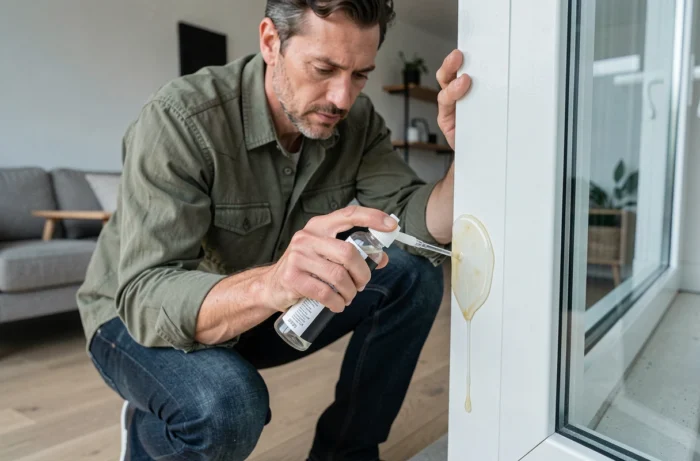
Recent guides now place isopropyl alcohol as the first choice over acetone for cleaning adhesive residues on PVC. The reason is simple: it dissolves most synthetic rubber-based adhesives (those from packaging tapes, masking tape, and duct tape) without softening the plastic substrate when the contact time remains short.
Concrete operating procedure
We soak a soft cloth (no cotton that leaves lint) with 90% isopropyl alcohol. We apply it to the glued area by dabbing, without rubbing at first. We let it sit for thirty seconds, allowing the solvent to penetrate the adhesive film.
Then, we gently scrape with a non-metallic tool: an old credit card, a flexible plastic spatula, or a fingernail. Soften first, scrape next, finish with a cloth: this three-step sequence prevents spreading the adhesive over a larger area.
We finish with a rinse in warm water mixed with dish soap to remove any trace of solvent. The PVC regains its normal appearance without dull spots or halos.
Construction tape left for several months: treating hardened adhesive
The most common case after construction or renovation is the brown or orange tape forgotten on PVC frames for months. The adhesive has polymerized due to heat and time. It forms a hard, sometimes cracked film that does not yield to water or simple wiping.
For this type of hardened residue, oil alone is no longer sufficient. Heat becomes the best ally to soften polymerized adhesive. A hairdryer set to medium heat, held about fifteen centimeters from the frame for one to two minutes, softens the adhesive layer without distorting the PVC.
We scrape immediately after heating, while the residue is still soft, with a plastic spatula. The pieces peel off in shreds. We then clean with isopropyl alcohol to remove the remaining greasy film.
Classic mistake with construction tape
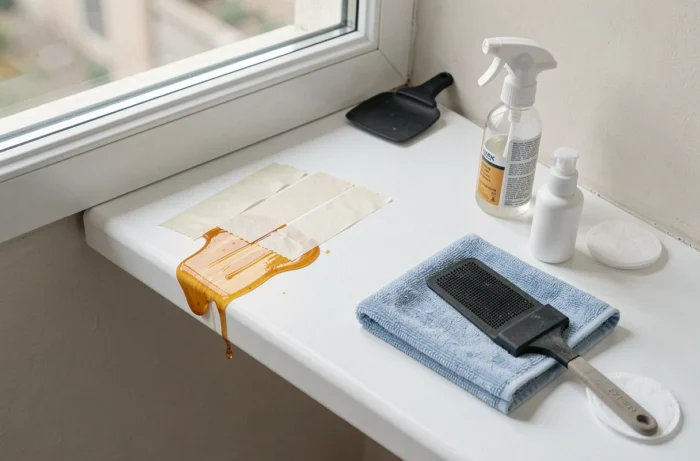
Scraping cold with a utility knife blade seems faster. In practice, the blade scrapes against the hardened adhesive and damages the PVC underneath. The scratches created are permanent on a standard white profile. They become even more visible as the low sunlight accentuates them.
Commercial products and degreasers: what really works on PVC
Some products sold as “adhesive removers” contain powerful solvents (toluene, xylene) designed for metal or glass surfaces. On PVC windows, they cause the same type of damage as acetone: dulling, softening, discoloration.
A mild household degreaser without chlorinated solvent remains the safest choice for regular use. We spray it, let it sit for a few minutes, then wipe. For stubborn marks, we combine it with the hairdryer method described above.
WD-40 also works on adhesive residues thanks to its oily base that breaks down the glue. We spray it on a cloth (not directly on the frame, to avoid drips on the glazing or seal), rub, then degrease with soapy water.
Summary of compatibilities
| Product | Effectiveness on fresh adhesive | Effectiveness on hardened adhesive | Risk for PVC |
|---|---|---|---|
| Cooking oil | Good | Low | None |
| Isopropyl alcohol | Very good | Good | Low (short contact) |
| Warm white vinegar | Medium | Low | None |
| Hairdryer + spatula | Not necessary | Very good | None (distance respected) |
| Acetone | Very good | Very good | High (dulling, haze) |
| WD-40 | Good | Medium | Low (rinsing required) |
PVC windows are quite forgiving when we adhere to one principle: soften the residue before removing it, and always finish with a rinse. Frames that retain marks after cleaning are almost always those that have been scraped too hard or had an overly aggressive solvent applied without prior testing. A discreet test in a corner of the frame, over two centimeters, is enough to verify that the chosen product will leave no additional marks.