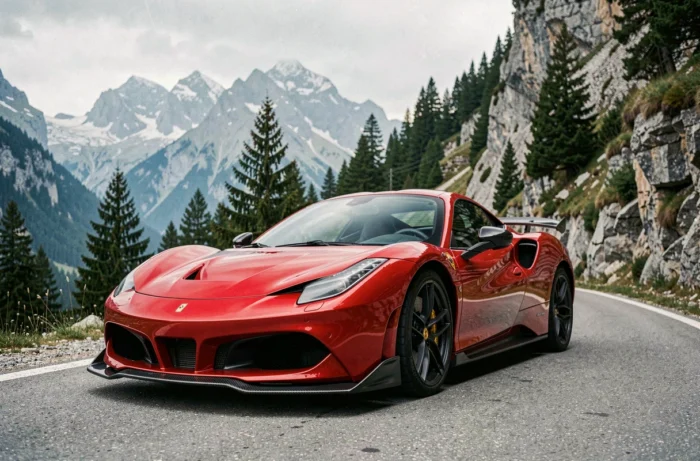
The segment of new sports cars is declining in Europe, with a drop of about 10% in registrations in the first half of 2026 compared to 2025. However, the market is not collapsing: it is polarizing around models with strong emotional appeal.
For enthusiasts, this contraction changes the perspective. The best cars for enthusiasts are no longer those that accumulate horsepower, but those that maintain a readable mechanical identity and a solid residual value.
Hybrid Sports Cars for Enthusiasts: The Transition That Reshuffles the Deck
The share of hybrid models in the high-end sports segment has risen from about 26% in 2025 to 35% in the first half of 2026. This shift is not cosmetic. Hybrid architectures profoundly change dynamic behavior: instant torque out of corners, energy recovery during braking, electronic management of traction on all four wheels.
We observe that enthusiasts who hesitated two years ago now accept the hybrid compromise, provided that the chassis remains communicative and the steering precise. An auxiliary electric motor that fills the torque gaps of a twin-turbo V6 does not betray the driving experience. It complements it.
The Porsche 911 illustrates this trajectory. While the European sports car market contracts, it progresses slightly and captures a dominant share of the segment. Its rear architecture, almost unchanged in principle for decades, absorbs electrification without losing its characteristic balance. For those looking to see cars on Motorcycle Boy, this coexistence between pure combustion and hybrid sports deserves to be explored before any purchase.
Reliability and Maintenance of Used Sports Cars
Buying a used sports car remains the most realistic entry point for the majority of enthusiasts. The purchase price represents only a fraction of the actual cost. A rigorous maintenance on a used sports car often costs more than the annual depreciation of the vehicle.
On a Jaguar F-Type or a Ford Mustang, the critical areas are known: timing, high-performance braking, active suspension. An incomplete maintenance record on these models should be disqualifying. We recommend checking three points before any transaction:
- The complete history of manufacturer revisions, not just the mileage displayed on the odometer.
- The condition of high-wear consumables (discs, ceramic or composite pads, tires with appropriate speed ratings) and their replacement date.
- The presence or absence of completed manufacturer recalls, which can be checked via the vehicle’s serial number.
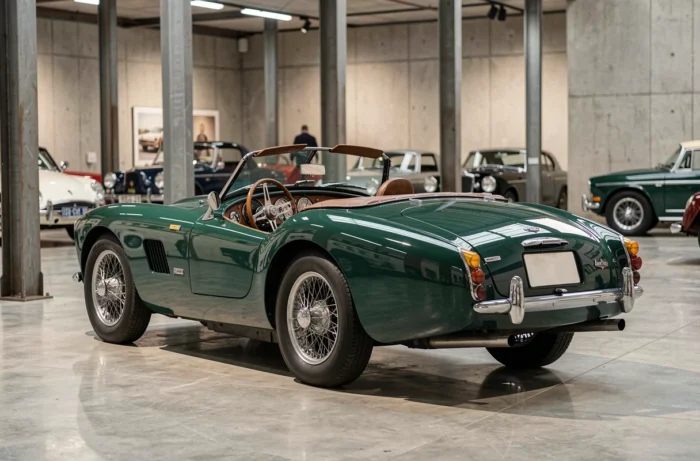
In the accessible collector market (Ferrari 348, Renault Clio V6, first-generation Alpine A110), the question of reliability arises differently. These models require a network of specialists and parts that are sometimes unavailable in standard catalogs. The annual maintenance budget for a collector’s sports car often exceeds that of a new sedan.
Best Price-Enjoyment Ratio Cars for Enthusiasts
The price-enjoyment ratio is not measured in horsepower per euro spent. It is measured in sensations per kilometer traveled. A Mazda MX-5 with a naturally aspirated four-cylinder and less than 200 horsepower provides more enjoyment on a country road than a 400-horsepower sports SUV on the highway.
Three categories of models stand out for enthusiasts who want to drive without breaking the bank:
- Lightweight roadsters (Mazda MX-5, Toyota GR86): low weight, rear-wheel drive, simple mechanics to maintain. The pleasure comes from the chassis, not from raw power.
- Sporty compact cars with combustion engines (Renault Mégane RS, Volkswagen Golf GTI): versatility for daily use, sharp handling on winding roads, dense network of parts and specialists.
- Recent used GTs (Mustang EcoBoost, Jaguar XE S): access to grand touring for a reasonable budget, provided that specific maintenance costs are anticipated.
The choice of model must correspond to actual use, not to a technical sheet. An enthusiast who drives 5,000 km a year on mountain roads has different needs than a daily commuter in an urban area.
Accessible Collector Cars: Market Status and Pitfalls to Avoid
The accessible collector market is attracting more and more enthusiasts looking for an alternative to new sports cars whose prices are soaring. Ferrari 308s, Renault Alpine A310s, or Porsche 944s are traded at levels that remain below a mid-range new sports car.
The main pitfall lies in the actual condition of the vehicle. A repainted body sometimes masks unreported structural work. On models from the 1980s and 1990s, corrosion of the chassis and wheel arches is the most common and costly defect to address.
The other pitfall concerns speculation. Some models see their value artificially rise due to perceived rarity, without their driving quality justifying the asking price. An informed enthusiast distinguishes between utility value (driving pleasure, relative reliability, availability of parts) and speculative value.
The best approach remains to target models produced in sufficient volume to ensure a long-term supply of parts. A Porsche 911 type 996, long shunned by purists due to its headlights, now offers access to the flat-six for a fraction of the price of a 997. Models undervalued by the market are often the most interesting to drive.
The market for enthusiast cars is reshaping around two axes: the gradual electrification of new sports cars and the rising value of pure combustion vehicles in the used and collector market. In both cases, technical knowledge of the targeted model and rigor in mechanical inspection remain the best decision-making tools.