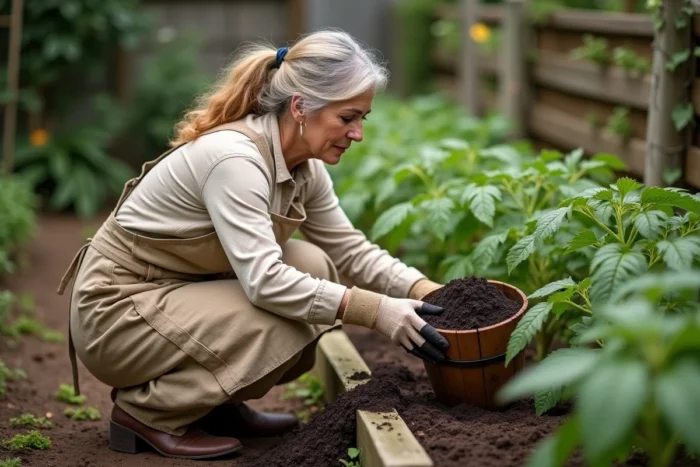
A clay soil that sticks to boots in March does not react at all like a sandy soil that dries out in fifteen days. Choosing a natural fertilizer for the vegetable garden without considering this reality is a waste of time and organic matter. It is often assumed that a bag labeled “organic” is sufficient, while the determining factor remains the speed at which the soil releases nutrients to the roots.
C/N Ratio of Natural Fertilizers: The Criterion Imposed by the Soil
Before comparing products, it is more efficient to reason in terms of carbon/nitrogen (C/N). This ratio conditions the speed of mineralization, that is, the time between the application and the moment when nitrogen, phosphorus, and potassium become available to plants.
Dried blood has a very low C/N ratio. Mineralization starts within a few weeks: it is a boost for fast-growing leafy vegetables like lettuce or spinach. In contrast, ground horn releases its nitrogen over several months due to its dense keratin structure. It is reserved for long-crop plants (tomatoes, squash) that need a regular supply until the end of the season.
When looking for the best natural fertilizer for the vegetable garden, the answer directly depends on the planting schedule and the type of vegetable targeted. A fertilizer with a low C/N ratio on a long-crop plant requires renewing the supply, while a fertilizer with a high C/N ratio on a radish will be almost useless.
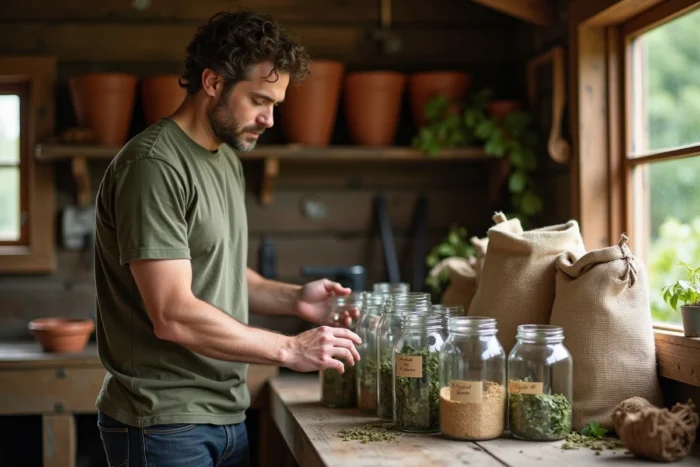
Green Manure in the Vegetable Garden: Fertilizing Without Buying
On a plot of land free between two crops, sowing a green manure costs a few euros and replaces a complete organic supply. The principle is simple: we grow plants whose biomass, once mowed and incorporated, nourishes the soil for the next crop.
Choosing Green Manure According to Season and Soil
Legumes (clover, vetch, fava bean) fix atmospheric nitrogen in their root nodules. They are sown after the summer harvest to enrich a soil depleted by nutrient-hungry crops. Sowing a legume after tomatoes replenishes the nitrogen reserve without any purchase.
Grasses (rye, oats) better structure a heavy, clayey soil thanks to their dense root system. They are mowed before seed formation, then left to decompose on the surface or lightly buried.
- Crimson clover: sowing from late summer to early autumn, nitrogen fixation, mowing in spring before flowering
- White mustard: quick sowing at the end of the season, loosens the soil, limits certain soil pests through biofumigation
- Phacelia: attracts pollinators, adapts to almost all soil types, does not belong to the brassica family (no conflict with cabbage and turnips in the rotation)
Returns vary on the ideal mix depending on the regions, but combining a legume and a grass generally yields a more balanced result than a pure sowing.
Cadmium in Phosphate Fertilizers: A Discreet Risk in the Vegetable Garden
Contamination is rarely discussed when it comes to fertilizers labeled “natural.” The French parliamentary debate since June 2024 has focused on lowering the thresholds of cadmium allowed in phosphate fertilizers. This heavy metal accumulates in the topsoil and migrates into root vegetables and grains, with documented risks for the kidneys and cardiovascular system.
Mineral fertilizers rich in mined phosphates (phosphate rock, certain guanos) are the most affected. For a vegetable garden where crops are consumed directly, favoring organic and local sources of phosphorus reduces this accumulation risk. Domestic compost, fish bone meal, or bone powder provide phosphorus without the cadmium concentrations associated with mining extraction.
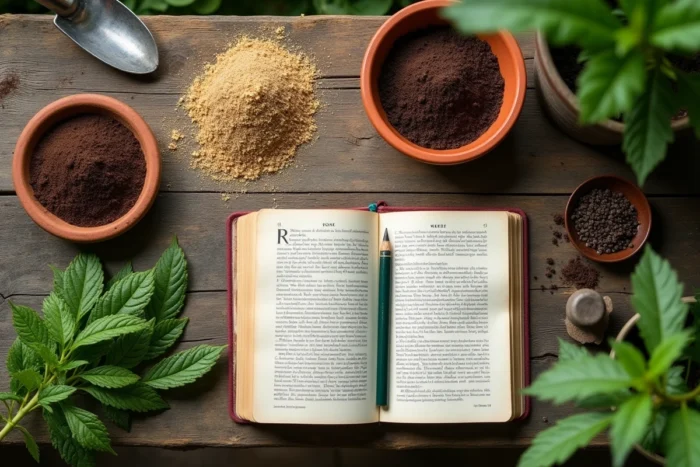
Adapting Natural Fertilizer to the Type of Vegetable Grown
You do not fertilize a row of beans like a row of zucchinis. The needs for nitrogen, phosphorus, and potassium vary greatly depending on the botanical family.
Fruit Vegetables and Potassium-Hungry Crops
Tomatoes, peppers, eggplants, and squash draw heavily from the soil’s potassium reserves during fruiting. Wood ash (untreated) provides quickly available potassium. It is spread in a thin layer at the base of the plants, without excess: too much ash alkalizes the soil and blocks iron absorption.
Leafy Vegetables and Need for Quick Nitrogen
Lettuce, spinach, Swiss chard have a short cycle and a high demand for nitrogen. Dried blood or diluted nettle manure responds well to this need. Nettle manure, rich in nitrogen and trace elements, also acts as a foliar stimulant when sprayed diluted on the foliage.
Legumes: They Manage on Their Own
Beans, peas, fava beans fix their own nitrogen. Providing them with a nitrogen fertilizer is unnecessary and may even promote foliage development at the expense of pods. A soil well-supplied with phosphorus and potassium is sufficient.
- Heavy feeders (tomatoes, squash): mature compost in spring, supplement with ash or beet vinasse for potassium during the season
- Short-cycle crops (lettuce, radishes): dried blood or nettle manure for a quick growth effect
- Legumes (beans, peas): no nitrogen fertilizer, a structured soil with compost is enough
- Root vegetables (carrots, beets): organic phosphorus (bone powder), loose soil, moderate nitrogen to avoid forked roots
Domestic compost remains the versatile base: it improves soil structure, nourishes microbial life, and provides a balanced nutrient supply. It is incorporated each year in spring, before planting, at a rate of a few centimeters thick on the surface.
The market for ready-to-use organic fertilizers is growing rapidly, with an offer that has nearly doubled in a few years. This abundance also implies more variability in product quality. Reading the composition and checking the origin of raw materials remains the most reliable reflex before buying anything at a garden center.