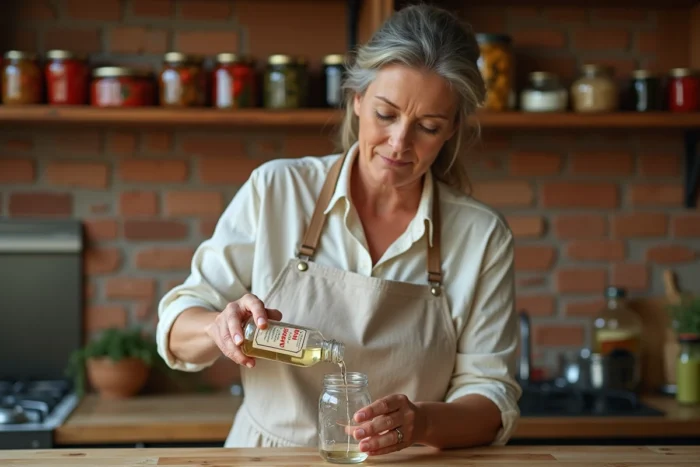
90° alcohol for fruits sold in supermarkets has been a staple for preserving fruits in jars for generations. At Leclerc, this product can be found either in the spirits aisle or in assisted sales, which often creates confusion about the exact nature of the bottle purchased. Understanding what the bottle contains, adjusting the dosage according to the type of fruit, and mastering the sterilization of the jar are three steps that determine the success (or failure) of homemade preservation.
90° alcohol for fruits in supermarkets: a product increasingly less accessible in self-service
Since 2024-2025, several Leclerc hypermarkets have removed 90° alcohol for fruits from self-service shelves. The product is gradually shifting towards assisted sales in the spirits aisle or to occasional orders through customer service. This reorganization is part of a heightened vigilance regarding high-alcohol products intended for the general public.
This repositioning complicates things for individuals used to grabbing the bottle between vinegar and sugar. It now needs to be requested, sometimes ordered. Some stores no longer stock it at all, pushing some consumers towards alternatives with 40-45° (vodka, rum, fruit brandy).
The difference in alcohol content is not trivial. With Leclerc’s 90° alcohol for fruits, aromatic extraction and preservation are quick and durable. A spirit with 40-45° requires a longer maceration for a comparable aromatic result, and the final shelf life is shorter than with 90° alcohol.
Food alcohol and household alcohol: the 90° label trap
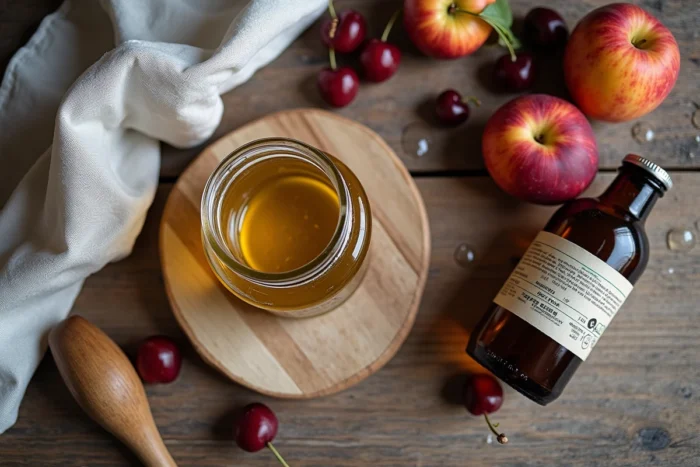
A bottle of 90° alcohol purchased in the drugstore section is not the same as one from the food section, even if the displayed degree is identical. Household alcohol contains denaturants (bitrex, methanol, or isopropanol depending on the production) that make it unfit for consumption. Ingesting a jar prepared with this type of product poses a real toxic risk.
Only alcohol explicitly labeled for food use is suitable for jars. The label to check on the bottle is the one that indicates “alcohol for fruits,” “liqueur preparation,” or “maceration.” In case of doubt, the barcode and the tax category (beverage alcohol, subject to excise duties) can clarify the situation.
Why the price difference is so significant
Food-grade 90° alcohol costs significantly more than household alcohol. This price difference reflects the specific taxation applied to beverage alcohol in France, as well as the more controlled distillation process. A bottle of 90° household alcohol at a pharmacy or drugstore remains much cheaper, but it cannot replace a food product.
Sterilization of jars before alcohol preservation: a step often rushed
The majority of preservation failures (wild fermentation, surface mold, altered taste) stem from insufficient sterilization of the container, not from an alcohol issue. Even 90° alcohol cannot compensate for a poorly prepared jar.
A reliable protocol relies on three points:
- Immerse the jars and their lids in boiling water for at least ten minutes, then let them dry upside down on a clean cloth without wiping them by hand
- Always check the condition of the rubber seal (or twist-off cap): a cracked or deformed seal from previous use compromises airtightness, regardless of the quality of the alcohol
- Fill the jar while hot or at room temperature according to the recipe, but never leave a sterilized open jar waiting several hours before filling
A properly sterilized and tightly sealed jar is the first condition for long-term preservation. The 90° alcohol then acts as a preservative and aromatic solvent, but it cannot rectify contamination introduced at the time of filling.
Dosage and maceration: adapting the method to the type of fruit
Not all fruits react the same way to 90° alcohol. Firm-fleshed fruits (cherries, plums, mirabelles) handle direct and prolonged immersion well. Soft-fleshed fruits (strawberries, raspberries, peaches) break down more quickly and require special attention to maceration time.
The role of sugar as a co-preservative
Sugar is not just a flavor enhancer in a jar of fruit in alcohol. It contributes to preservation by lowering the water activity in the preparation, which limits microbial growth. Excessively reducing sugar in a fruit in alcohol recipe shortens the shelf life.
The classic method consists of alternating a layer of fruit and a layer of sugar in the jar, then covering with 90° alcohol until fully submerged. The sugar gradually dissolves and creates a syrup that stabilizes the preparation.
Resting time before consumption
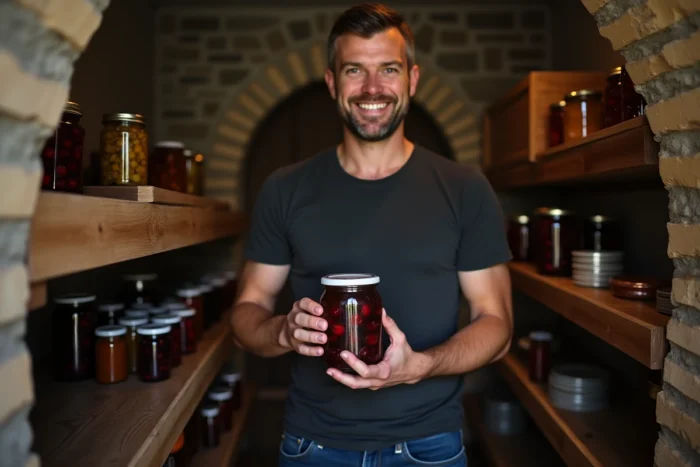
A jar of fruit in alcohol improves in quality over time. Maceration allows the alcohol to extract the aromas, pigments, and natural sugars from the fruit. Field reports vary on the minimum time: some preparations are consumable after a few weeks, while others benefit from resting for several months in a cool, dark place.
The higher the alcohol content, the faster the extraction. With 90° alcohol, maceration reaches an aromatic balance faster than with a 40-45° spirit, which requires more patience for a comparable result.
Storage of jars of fruit in alcohol: light and temperature
Once sealed, jars should be stored in a cool, dry place, and especially out of direct light. Exposure to UV light degrades the pigments of the fruits (cherries turn brown, raspberries lose their color) and can alter the taste of the preparation over the long term.
The ideal storage temperature is in a cool room like a cellar or pantry. A kitchen cupboard exposed to the heat of an oven or stovetop shortens the lifespan of the jar, even with 90° alcohol. Repeated temperature fluctuations should also be avoided: they cause micro-expansions of the lid that can break the airtight seal.
Preserving fruits in jars with 90° alcohol remains a reliable method as long as no step is overlooked, from purchasing the right food product to choosing the storage location. The alcohol content ensures preservation, the sugar stabilizes it, and the sterilized jar protects it all. Every link matters.