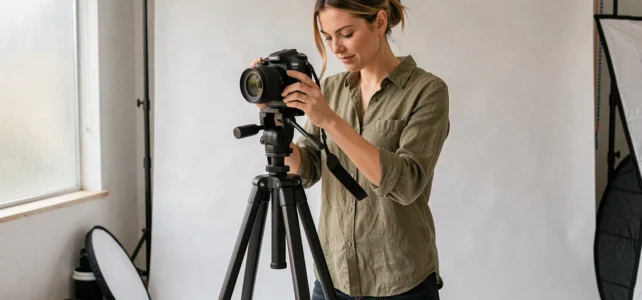
A failed professional photo shoot can be spotted in three seconds: flat lighting, stiff posture, and a background that distracts from the message. The difference between a successful image and a forgettable photo is rarely determined on the day itself. It is built in the weeks leading up to it, through concrete choices about the location, attire, lighting, and artistic direction. For a corporate portrait as well as for a product campaign, preparation remains the most underestimated lever.
Employee image rights: the legal constraint that changes the organization of the shoot
When organizing a team photo session, the question of consent often comes too late. Since 2022, the Court of Cassation has reminded that an identifiable employee in a photo published without their written consent can claim damages, even without proving concrete harm.
The penalties are not symbolic. Articles 226-1 and following of the Penal Code provide for up to one year in prison and a fine of 45,000 euros for capturing in a private place, and 15,000 euros for publishing without authorization. These amounts concern the commissioning company, not the photographer.
Each identifiable person must sign a written authorization before the shoot. The distribution media (website, social media, print) and the duration of use are specified. An employee who refuses cannot be penalized. For professionals accompanying these sessions, specialized studios like those listed on https://eyes-wide-shoot.be/ integrate this document management before the shoot.
In practice, a standard form is prepared with three levels of agreement: internal use only, limited external communication, expanded advertising use. A summary table signed on the day of the shoot avoids disputes six months later when the photos appear in a LinkedIn campaign.
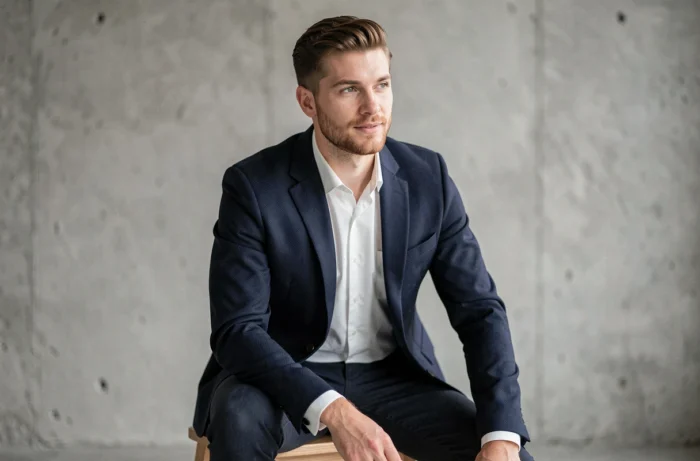
Professional photo shoot: prepare the artistic direction before the equipment
Companies often invest in a quality photographer, then improvise on the day of the session. The result: dozens of usable portraits but lacking visual coherence. Artistic direction is not only about fashion or advertising.
Define a moodboard suitable for your sector
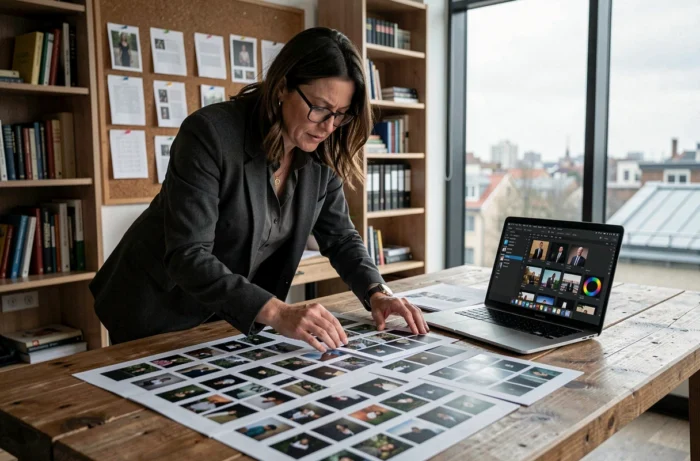
A moodboard, even a basic one, aligns expectations between the photographer, the communication manager, and the photographed individuals. It gathers references for framing, color palette, and lighting ambiance.
- For a consulting firm or a notary office, neutral backgrounds, soft lighting, and sober outfits that enhance credibility are preferred
- For a tech startup or a creative studio, real-life settings (open space, workshop) can be used, with brighter colors and off-center framing
- For an e-commerce product shoot, consistency is key: same background, same color temperature, same focal length throughout the series
The moodboard reduces shooting time by at least one third because everyone knows exactly what is being sought. This document is sent to the photographer at least a week before the session.
Choose the location based on natural light
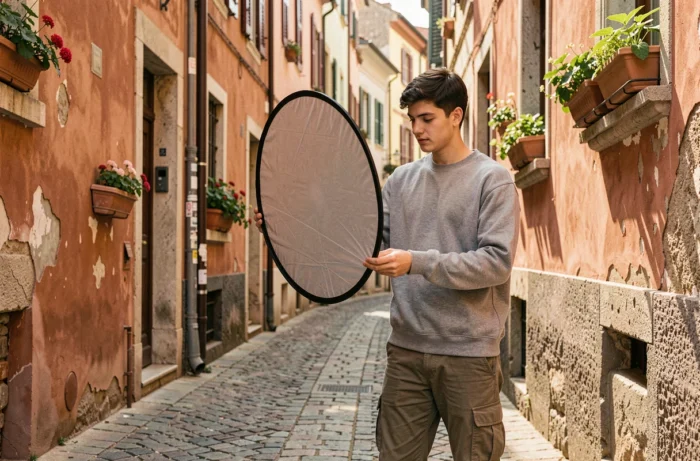
An indoor shoot with natural light requires scouting the location at the time of the session. The quality of light changes radically between 9 AM and 2 PM, especially in glass offices. Outdoors, early morning or late afternoon slots offer softer and more flattering light for portraits.
If the location requires artificial lighting, the photographer should plan for off-camera flash or LED panels. Direct lighting from an integrated flash flattens facial volumes and gives an amateurish result, regardless of the camera used.
Attire and makeup for a successful corporate portrait
The choice of attire directly influences the viewer’s perception of the photographed person. It is advisable to prepare two clothing options on the day of the shoot: a formal outfit and a slightly more casual alternative.
Solid colors work better than complex patterns. Thin stripes create a moiré effect on screen, and visible logos distract the viewer’s attention. Pure white (overexposure on the shoulders) and complete black (loss of detail in shadows) should be avoided.
Regarding makeup, the goal is not to transform the face but to correct shine. A light mattifying foundation is sufficient in most cases, including for men. Areas to watch: the forehead, the bridge of the nose, and the chin, which catch flash light and create unwanted reflections in photos.
Posture and gaze in front of the camera: concrete mistakes to correct
Most people freeze as soon as a camera is pointed at them. The result: raised shoulders, clenched jaw, fixed gaze. A good photographer gives continuous verbal cues, but some reflexes can be prepared in advance.
- Slightly advancing the chin down avoids the double chin effect without creating an artificial posture
- Turning the shoulders about 30 degrees from the camera refines the silhouette and adds depth to the portrait
- Looking into the back of the lens (not the surface of the glass) creates a natural eye contact with the viewer of the photo
- Relaxing the hands along the body or placing them on a work surface, never crossed in front (defensive posture)
A convincing professional portrait conveys confidence, not rigidity. The photographer is asked to shoot continuously while we talk or move slightly, rather than freezing a pose for ten seconds.
Feedback varies on the question of smiling: a genuine smile works in contact professions, while a more composed look suits leadership roles. The choice depends on the image one wishes to project and the final medium (LinkedIn, corporate site, institutional brochure). What remains constant is that a portrait taken under good technical conditions, with serious preparation beforehand, stands out immediately from a hastily cropped, approximate photo.