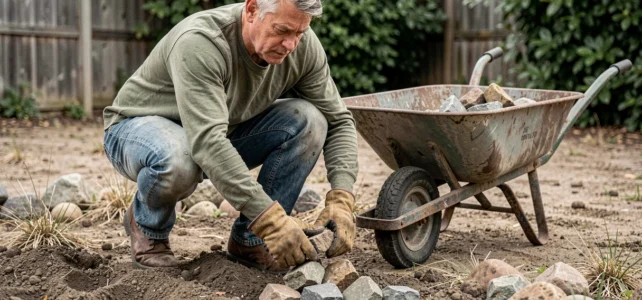
Removing stones from a plot before sowing grass or installing a vegetable garden remains one of the most underestimated chores in gardening. The difficulty lies not only in the physical effort: it depends on the nature of the soil, the size of the stones, and the area to be treated. And once the stones are extracted, the question of their disposal arises, with regulatory constraints that few guides address.
Stones extracted from the garden: what the regulations require
Most content on cleaning a stony plot stops at extraction. The logical next step (what to do with the accumulated piles of stones) is, however, governed by law.
The stones and debris resulting from landscaping work are classified as inert waste under French law. They are prohibited in household waste bins and in regular bulky item collections. The municipal waste disposal site remains the legal channel for individuals, provided that the accepted volumes for each site are respected.
Since January 1, 2024, sorting into five waste categories (mineral fraction, metal, wood, plaster, plastics/glass/paper-cardboard) is mandatory on all construction sites, regardless of size. If you hire a landscaping company to level your land, they are required to sort the extracted materials in accordance with the AGEC law and its decree on source sorting.
Illegal dumping of stones or stony soil along roadsides or field edges can lead to fines. Field reports vary on the actual level of control depending on the municipalities, but the legal framework is clear. Knowing how to remove stones from a plot also involves planning their final destination before starting the project.
Mechanical screening or manual collection: choose according to the surface area
The choice of method depends on two variables: the area to be treated and the grain size of the stones present in the soil.
Small surfaces and urban gardens
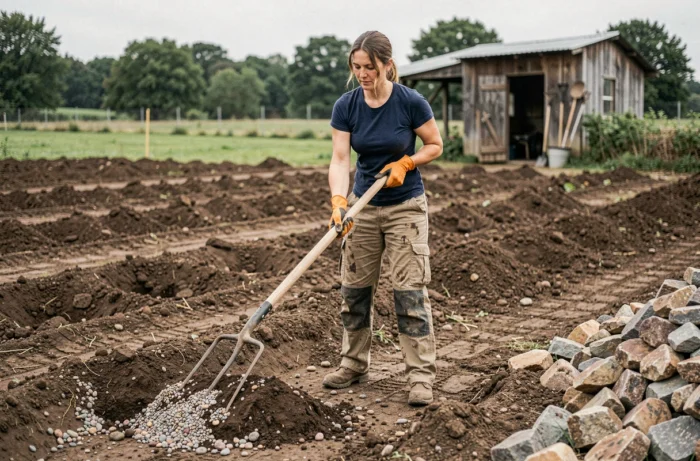
For a plot of a few dozen square meters, manual work with a wide-toothed metal rake is usually sufficient. The principle is simple: scratch the surface soil, gather the stones into piles, and then remove them with a wheelbarrow.
- The stone rake (with teeth spaced several centimeters apart) allows fine soil to pass through while retaining medium-sized stones. It can be found in most garden centers.
- The digging fork allows for lifting clods from deep down and bringing buried stones to the surface, but the work quickly becomes tiring on clay soil.
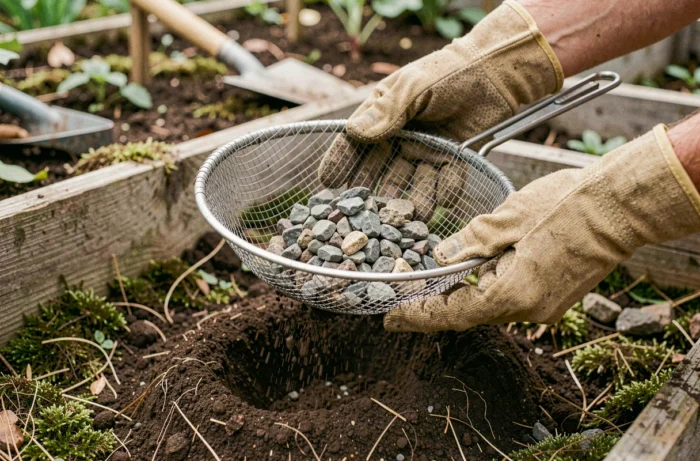
- The garden sieve, placed on a wheelbarrow, offers more precise sorting. Each shovel of soil is passed through the grid, effectively separating the stones from the topsoil.
These methods remain suitable for preparing a vegetable bed or a small strip of grass. Beyond a hundred square meters, fatigue makes the process very slow.
Large plots: the rotavator and stone pickers
On larger plots (buildable land after construction, meadow to be converted into lawn), using agricultural machinery changes the game. The rotavator, attached to the back of a tractor, turns the soil deeply while ejecting solid elements: stones, roots, branches.
Mechanical stone pickers come in two main types: box pickers and rotary models. The former collect stones in a liftable bin, while the latter project them into windrows on the side. The choice between the two depends on the size of the dominant stones and the terrain. A sloped soil complicates the use of box models, while rotary models adapt better to uneven surfaces.
Renting a rotavator or a tiller with a screening attachment is possible at equipment rental stores. Expect a day’s work for a medium-sized plot, provided the soil is not waterlogged.
Sloped terrain and clay soil: pitfalls to anticipate
Not all guides specify this: the nature of the soil radically changes the method to be employed. A crumbly limestone plot releases its stones quite easily when a mechanical tool passes over it. Clay soil, on the other hand, traps stones in compact clods that resist both raking and rapid screening.
On clay, working the soil after a period of moderate dryness yields better results. Soil that is too wet sticks to tools and forms blocks that are difficult to sift. Completely dry soil cracks and hardens to the point of making digging painful.
Sloped terrains pose an additional problem. The repeated passage of a heavy machine (tractor, tiller) can cause soil compaction at the bottom of the slope and erosion at the top. On this type of terrain, working in strips perpendicular to the slope limits the movement of topsoil downward.
Burying stones instead of removing them: a false good idea
Some landscapers suggest burying stones deeply rather than extracting them. The cost per square meter is often lower than that of complete removal. On specialized forums, several testimonials mention a price of around one euro per square meter for burying, compared to more for extraction.
The problem is physical: the cycles of freezing and thawing, combined with the work of earthworms and the natural compaction of the soil, bring buried stones back to the surface within a few years. This phenomenon, well known to farmers, turns burying into a temporary solution. For ornamental grass, stones that resurface complicate mowing and damage the blades.
Extraction remains the most sustainable method, even if it requires more time and budget. If burying is chosen due to financial constraints, it is essential to ensure that the largest elements (flint several centimeters long, pieces of concrete) are removed before pushing the rest deep down.
Cleaning a stony plot is not just about the technical gesture of scraping and collecting. The choice between manual and mechanical work, taking into account the slope and type of soil, and the regulatory management of extracted waste: each step determines the quality of the final result and its durability over time.