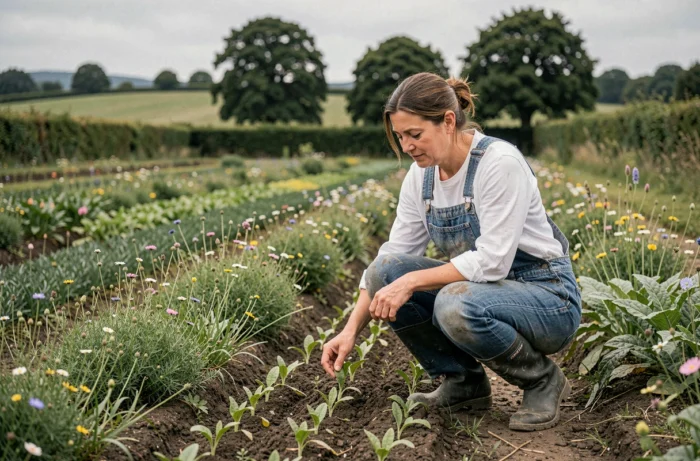
On a grain farm in Beauce, replanting a 300-meter hedge between two plots changes the game: beneficial organisms return, wind erosion decreases, and the soil retains water better after a storm. Sustainable agriculture often starts with this type of concrete intervention in the landscape, long before major strategic plans.
Since March 2025, Article L1 of the Rural Code explicitly recognizes agroecological production systems as an objective of agricultural public policies in France, with a clear goal: to increase the length of hedges between 2024 and 2030.
Hedges and intra-plot trees: what the reform of the Rural Code changes
The amendment to the Rural and Maritime Fishing Code, which came into effect on March 24, 2025, places hedges and alignments of intra-plot trees at the level of full agricultural infrastructures. The state commits to ensuring their preservation, sustainable management, and establishment.
On the ground, it is known that hedges slow down erosion and improve water infiltration in soils. They also provide shelter for beneficial organisms (ground beetles, hoverflies, great tits) that naturally regulate pests. The text recognizes their role in carbon storage, which opens the door to valorization schemes for farmers.
Replanting a hedge is not just about lining up plants. It requires choosing local species suited to the soil, planning for mulching to limit herbaceous competition in the early years, and accepting that the hedge will reach its full ecological functionality in five to ten years.
Returns vary by region and pedoclimatic conditions. Farms that document their approach on platforms like agriculture-et-paysage.fr contribute to sharing these experiences across territories.
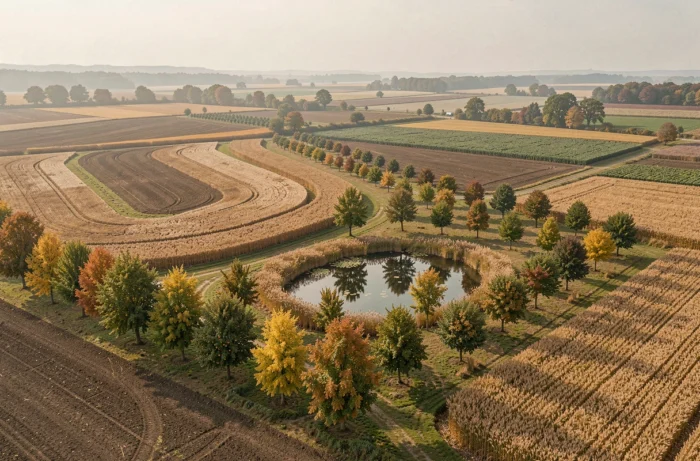
Crop rotation and soil cover: two concrete levers for biodiversity
When discussing sustainable agriculture and biodiversity, crop rotation is the first operational lever. Alternating cereals, legumes, and oilseeds on the same plot breaks pest cycles, reduces reliance on phytosanitary products, and diversifies the microbial life of the soil.
A long rotation of four to five years significantly reduces pest pressure compared to monoculture. Legumes fix atmospheric nitrogen, which decreases the need for synthetic fertilizers for the following crop.
Permanent soil cover is the other pillar. Leaving bare soil between two crops exposes it to water erosion and leads to a loss of organic matter. Cover crops (mustard, phacelia, clover) serve multiple functions at once:
- They protect the soil surface from runoff and maintain its structure, even during intense rainfall events.
- They nourish soil fauna (earthworms, springtails) during the intercrop period, which maintains the biological fertility of the plot.
- They limit the emergence of weeds by competing for light, reducing the need for chemical weeding.
A permanently covered soil stores more organic carbon than bare soil. This is a measurable benefit for the environment and for the resilience of the farm in the face of climate variability.
Water management in agricultural plots: adapting practices to the territory
In France, the agricultural sector consumes 61% of the available freshwater, while only 7% of agricultural land is irrigated. This imbalance shows that irrigation practices place enormous pressure on already strained areas.
In regions where water resources are under stress, rethinking the agricultural landscape involves concrete choices. Agroforestry, for example, combines trees and crops on the same plot. Trees create shade, reduce evapotranspiration, and promote deep water infiltration through their root systems.
The choice of cultivated species also matters. Favoring varieties adapted to local water stress rather than water-intensive crops reduces dependence on irrigation. Trials of sorghum or chickpeas are emerging in areas traditionally dedicated to irrigated corn, with promising results in terms of water consumption.
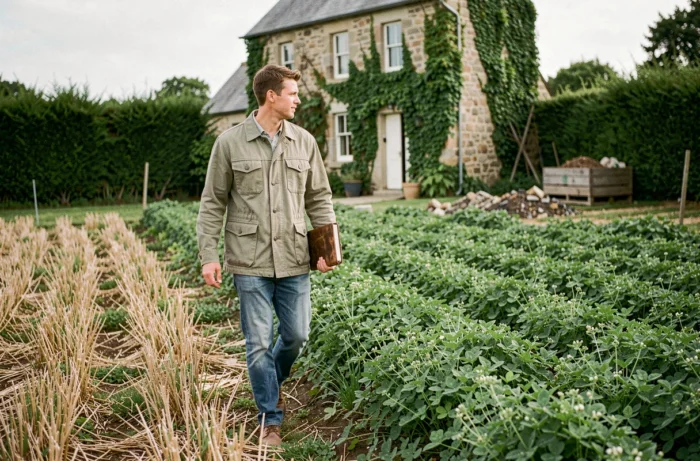
Ponds and buffer zones: functional landscape elements
Ponds, grassy ditches, and buffer strips along waterways are not just simple landscape ornaments. They are ecological infrastructures that filter agricultural pollutants before they reach groundwater. They also serve as habitats for amphibians, dragonflies, and a diversity of species associated with wet environments.
Installing a grassy strip of a few meters along the edge of a plot is enough to reduce the transfer of nitrates and phytosanitary products to surface waters. The cost is modest, but the effect on water quality is measurable within the first few years.
Agricultural landscapes and pollinators: recreating ecological corridors
The European Union has adopted a framework to reverse the decline of pollinators, an issue directly linked to agricultural practices. On the ground, the simplification of landscapes (removal of hedges, embankments, flowering strips) has reduced the food resources available for wild bees, bumblebees, and butterflies.
Recreating ecological corridors between agricultural plots allows these species to move, feed, and reproduce. Specifically, this involves:
- Maintaining or planting flowering strips with nectar-rich species along field edges, with staggered flowering from spring to autumn.
- Conserving embankments, walls, and wooded edges that serve as nesting sites for wild pollinators.
- Reducing insecticide treatments during flowering periods, favoring biological control or biocontrol.
These actions are not ancillary. Insect pollination directly affects the yield of many crops (rapeseed, sunflower, fruits, vegetables). Protecting pollinators also means securing food production in the medium term.
Sustainable agriculture is built plot by plot, hedge by hedge, cover by cover. Farms that integrate these landscape elements into their production system observe cumulative effects: more fertile soils, enhanced biodiversity, better water management. The French regulatory framework is now pushing in this direction; the challenge remains to translate these objectives into linear meters of planted hedges and hectares of covered soils.